

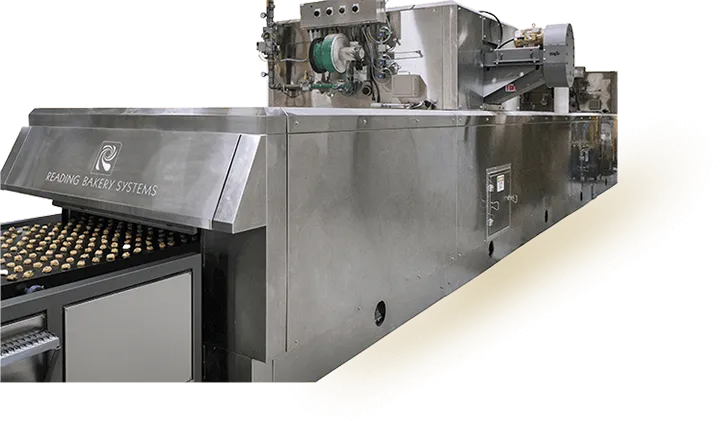
 When you’re comparing tunnel oven zone control strategies in a high-volume cracker plant, it’s easy to focus on maximum temperature and move on. That doesn’t tell you nearly enough. What really separates one oven from another is how each zone handles product development, moisture removal, color, and recovery when production conditions shift. When choosing the most efficient tunnel oven for cracker production lines, Reading Bakery Systems will make that decision easy. We design tunnel ovens with separate zones that let operators shape the bake instead of chasing problems after they show up.
What You’re Really Comparing
A smart comparison starts with the job each part of the oven has to do. In the front of the oven, dough development and early flavor formation usually benefit from conditions that hold humidity and apply heat in a controlled way. In the middle, the oven has to drive off moisture without beating up the product. In the back, the focus shifts again toward final color and final moisture.
If one zone strategy tries to do all of that with the same heating approach, operators usually end up making constant adjustments just to stay on target. Hybrid zone control stands out because it lets different sections of the oven do different work well. Reading Bakery Systems has highlighted that combination of DGF zones up front with convection zones farther back because it gives bakers tighter control over drying and coloring, where traditional approaches often get clumsy.
Why We Don’t Think More Burners Means Better Control
A lot of people still assume more burners mean more control. In practice, that often means more moving pieces, more operator involvement, and more opportunity for uneven results. One of the most useful ways to compare zone control strategies is to ask how the oven behaves during a slowdown, a stop, or a product change.
Traditional DGF systems can require extra intervention to stabilize temperatures and avoid overheating. Hybrid designs with convection drying zones can reduce that burden because those zones are better suited for controlled moisture removal and are less prone to the same overheating issues during interruptions. That difference matters in a high-volume cracker plant, where small disruptions can turn into a lot of waste very quickly.
Where We See the Biggest Difference in Cracker Consistency
The best zone control strategy isn’t just about keeping the oven hot. It’s about keeping crackers consistent from edge to edge and hour to hour. That’s where separate zone control, adjustable air handling, and the ability to repeat time, temperature, humidity, and heat transfer conditions become much more important than raw oven size.
Our PRISM OVEN platform was built around that kind of precision for crackers, cookies, and biscuits, with recirculation and convection zones that support balanced product quality. We also use tools like our SCORPION data logging system to understand what’s actually happening inside the oven, not what operators hope is happening. That matters because good cracker baking depends on measured process control, not guesswork.
In addition, our newer Emithermic XE approach was developed to improve cracker baking performance while reducing energy use, emissions, and cleaning burden compared with traditional DGF technology. That same practical mindset shows up in real-world results. In one recent RBS case study, a bakery moving from rack ovens to an automated tunnel oven system quadrupled flatbread output while reducing labor and improving bake uniformity.
Find out more about choosing the most efficient tunnel oven for cracker production lines by calling Reading Bakery Systems at 610-693-5816 or contacting us online.