
 When bakeries plan new industrial bakery equipment in Frankfurt, Germany, it’s easy to focus on throughput, footprint, and product range first. Those things matter, but sanitation expectations should shape the conversation much earlier than they often do. If a line looks efficient on paper but takes too long to clean, creates hard-to-reach debris zones, or forces crews into awkward maintenance access, that equipment can quietly drain production time week after week.
At Reading Bakery Systems, we think sanitation planning should be part of the original equipment discussion because it affects uptime, labor, product protection, and the pace of the whole plant, not just the cleanup crew. We support full production systems across mixing, dough handling, forming, ovens, cooling, and auxiliary equipment, so we see sanitation as a line-level planning issue rather than a side note.
Why You Can’t Treat Sanitation Like a Later Add-On
A lot of costly sanitation problems don’t start with poor cleaning practices. They start with equipment choices that didn’t give sanitation enough weight in the first place. When components are harder to access, product transfers leave more buildup behind, or older designs create more wear points and trapped material, cleaning takes longer, and maintenance gets more disruptive.
That’s one reason we put real emphasis on sanitary improvements instead of treating them like cosmetic refinements. For example, our Loaf Maker Sanilite Hopper Upgrade is designed to make dough delivery and sanitation easier, and our one-piece auger upgrades are described as more sanitary than older designs because they eliminate pins and plugs that can create problems in production.
Where We Think Sanitation Planning Pays Off the Most
Sanitation expectations tend to have the biggest effect where dough moves, transfers, and accumulates. Those are the places where a line can lose time without anyone calling it downtime. We’ve found that better access and simpler component design can have a very real production effect.
Our proofing conveyor retractable nose upgrade, for instance, is specifically meant to allow easier access to dough forming equipment and reduce maintenance and sanitation time. That kind of improvement may sound small, but it changes how quickly teams can get in, clean thoroughly, and get back to production. We think that’s the kind of detail bakeries should plan around from the beginning, especially when they’re buying industrial equipment expected to run hard every day.
Sanitation and Reliability Belong Together
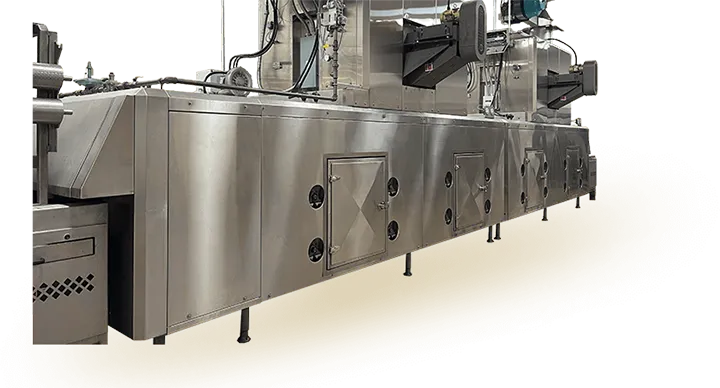
Sanitation planning also overlaps with reliability more than many teams expect. Equipment that corrodes, collects debris, or wears unevenly can create both cleaning challenges and mechanical ones. Reading Bakery Systems provides that connection through several retrofit options. Our Top End Oven Repair upgrade moves the combustion system outside the oven to help virtually eliminate corrosion, and our belt brush cleaning system is designed to remove product debris automatically and reduce contamination risk.
We also support customers with technical support, parts service, and the RBS EZone portal, which helps plants maintain equipment more consistently over time. In other words, sanitation planning shouldn’t just ask how the line gets cleaned today. It should ask how the equipment will stay cleaner, safer, and easier to support over the long term.
If you are planning new industrial bakery equipment in Frankfurt, Germany, or you want to make upgrades to your current line, please get in touch with Reading Bakery Systems. You can call +1 610-693-5816 or contact us online.