

 It’s exciting when a snack performs well in a pilot setting, but that doesn’t mean it’s ready for full production without a second look. A pilot run proves that a product can work. It doesn’t automatically prove that it’ll keep working at commercial speed, over long shifts, with larger ingredient volumes and tighter operating windows. That’s where many snack manufacturers get surprised. Reading Bakery Systems, experts in snack food manufacturing equipment in Guatemala, help companies avoid those surprises.
Prioritize Process Repeatability Before Output
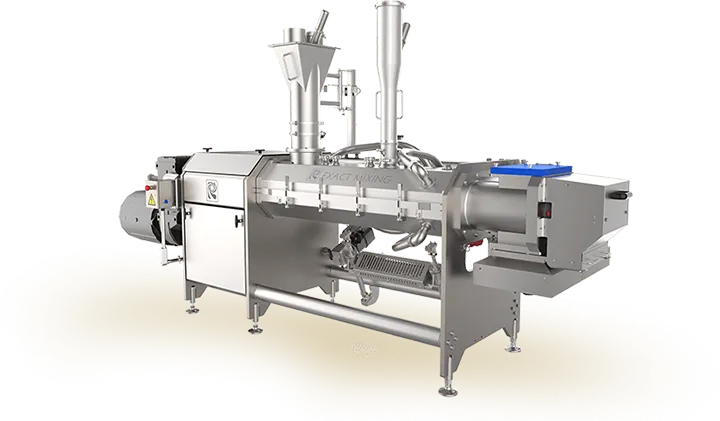
When teams start planning for full production, output usually gets most of the attention. We think repeatability should come first. If hydration, ingredient distribution, dough development, or feed consistency shift from run to run, scaling faster only makes those problems more expensive. That’s especially true in snack production, where small changes in moisture and mixing can affect forming, cutting, texture, and final appearance. Our continuous mixing systems address that by matching mixer type to product needs, whether the application calls for wheat-based snacks, low-moisture powders, or other snack dough systems. We’d rather help a manufacturer build a process that repeats cleanly every day than push for volume before the foundation is ready.
Prioritize Product Behavior, Not Just Product Specs
A formula sheet can tell you what a snack is supposed to be. It won’t always tell you how that snack behaves when the line is running hard. That’s a major reason scaling can get tricky. Texture targets, strand quality, cut behavior, and moisture response don’t always stay the same when the process gets faster and more continuous.
Manufacturers should observe hydration curves, development windows, and product behavior in real time before committing to a large-scale launch. We think that’s one of the most practical priorities during scale-up, because it helps teams understand how the product actually performs instead of relying only on what it looked like in a smaller batch or short pilot session.
You Can’t Ignore Flexibility While You’re Chasing Capacity
It’s easy to focus so much on getting one product to full scale that flexibility gets forgotten. That can become a problem fast, especially for snack manufacturers that expect line extensions, new flavors, or adjacent products once the first item succeeds.
We’ve continued to expand equipment and process options across snack categories because the strongest production investments usually leave room for future moves. A system that can support innovation, trials, and process changes gives manufacturers more control over what comes next. That’s part of the value of working with us through our Science and Innovation Center and full system planning rather than treating scale-up as a one-time equipment transaction.
You’ll Scale More Successfully When You’re Planning for Real Production Life
When it comes to purchasing snack food manufacturing equipment in Guatemala, companies should prioritize repeatability, line balance, real product behavior, and future flexibility when moving from pilot to full production. Those are the areas that keep a promising concept from stalling once real factory conditions take over.
Full production asks more from a snack than a pilot line ever will. We believe the best scale-up plans account for that early, which is why we combine pilot testing, continuous mixing expertise, and full-line thinking to help manufacturers move forward with more confidence. When the process is built for real production life, scaling up doesn’t feel like a leap. It feels like the next logical step. Call +1 610-693-5816 or contact us online to learn more from a Reading Bakery Systems professional.