

 When answering the question, “What are the key steps in bread production?” the importance of time can’t be overstated. A short delay at ingredient delivery, a slight inconsistency in dough temperature, a proofing section that needs extra attention, or a handoff that isn’t quite synchronized can quietly chip away at output all shift long. In a high-volume plant, those small interruptions don’t stay small for very long. They turn into reduced throughput, uneven product flow, and more operator intervention than anyone planned for. That’s why, at Reading Bakery Systems, we look at time loss as a system issue, not just a machine issue.
Where Dough Prep Isn’t Helping the Line Move
One of the easiest places to miss hidden time loss is right at the front of the line. If the dough arrives inconsistently, everything downstream has to compensate. A line may still be running, but it won’t be running cleanly.
Our continuous mixing systems are built to deliver dough at controlled rates and consistent temperature, which helps reduce the slowdowns that come from overcorrecting later in the process. The HDX Continuous Mixer, for example, is designed for highly developed doughs used in breads and buns, while our broader continuous mixing range supports different production demands and capacities. When dough development is steadier, the rest of the line doesn’t have to waste time correcting for variation that started upstream.
Why Transfers Aren’t as Quick as They Look
A lot of line time disappears between major steps rather than inside them. Transfers between mixing, makeup, proofing, baking, cooling, and packaging can look smooth from a distance while still creating drag. If products don’t enter the next stage evenly, operators start making small manual adjustments, and those little interventions add up.
We’ve seen how better dough handling, feeding, and proofing control can reduce those hidden pauses by keeping product flow more predictable. Our dough handling systems and automated proofing solutions are designed to support consistent movement through the line, not just isolated performance at one station. That distinction matters because a bread line doesn’t earn its speed at one machine. It earns it at every handoff.
Why Proofing and Baking Can’t Afford Guesswork
Proofing and baking are two of the biggest places where unnoticed time loss can hide behind acceptable output. A line may still be producing bread, but if proof conditions drift or oven airflow isn’t well managed, teams often compensate with slower settings, tighter monitoring, or more frequent adjustments. That’s not always recorded as downtime, even though it’s absolutely costing time.
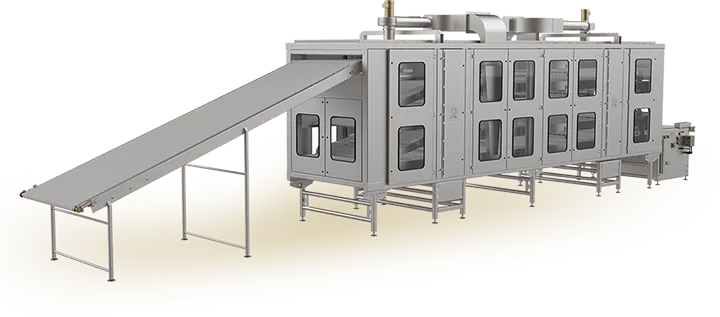
Our Multi-Pass Proofer uses PLC control of heat and humidity in a compact footprint, while our electric convection oven technology focuses on airflow and even heat distribution to reduce hot spots and uneven baking. When those stages run with more control, operators don’t have to spend the day nudging the process back into place.
Older Equipment Doesn’t Always Show You Where Time’s Going
Another reason hidden losses stick around is that older equipment often doesn’t make them visible. A line may keep running even while sanitation takes longer than it should, dough delivery gets less precise, or component wear creates repeat slowdowns. That’s where upgrades and support can make a real difference. We offer retrofits such as sanilite hopper upgrades, loaf maker auger upgrades, servo motor control packages, and other improvements that can tighten control and reduce recurring friction points.
Our experts will be happy to answer the question, “What are the key steps in bread production?” and explain how Reading Bakery Systems products make that production more efficient than ever before. Get in touch by using our online form or calling 610-693-5816.